
Level 1Rules
Texas Hold'em Rules: How to Play, Step by Step
Learn the rules of Texas Hold'em from the blinds to the showdown. A clear, step-by-step guide to every betting round, action and tie-breaker.
Learn
Clear, practical lessons: five core Hold’em levels plus courses in tournaments, PLO4 and PLO5. Filter by level, course or topic.
79 tutorials
Learn the rules of Texas Hold'em from the blinds to the showdown. A clear, step-by-step guide to every betting round, action and tie-breaker.
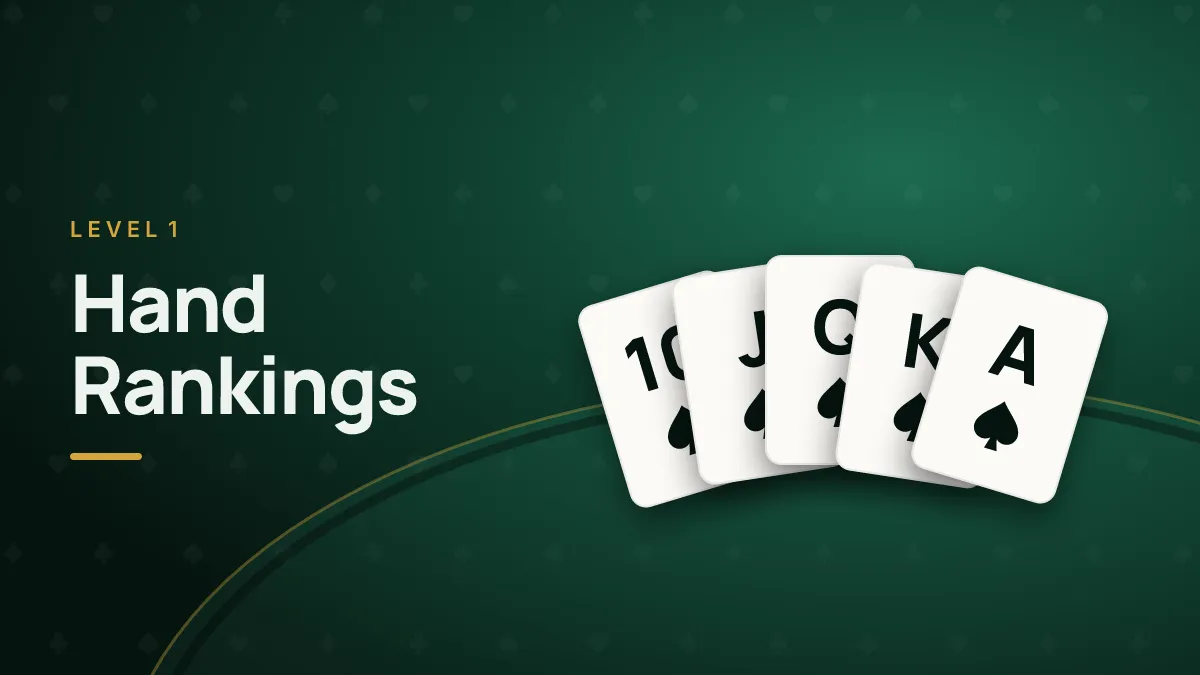
Every poker hand ranked from strongest to weakest, with examples, odds and the tie-break rules that settle close showdowns.
How much you can bet and raise in No-Limit Hold'em, what happens when someone is all-in, and the betting rules that settle most disputes at the table.
The poker vocabulary you'll hear at every table, grouped by topic: seats, actions, hand types, draws, money and strategy — each explained in plain English.
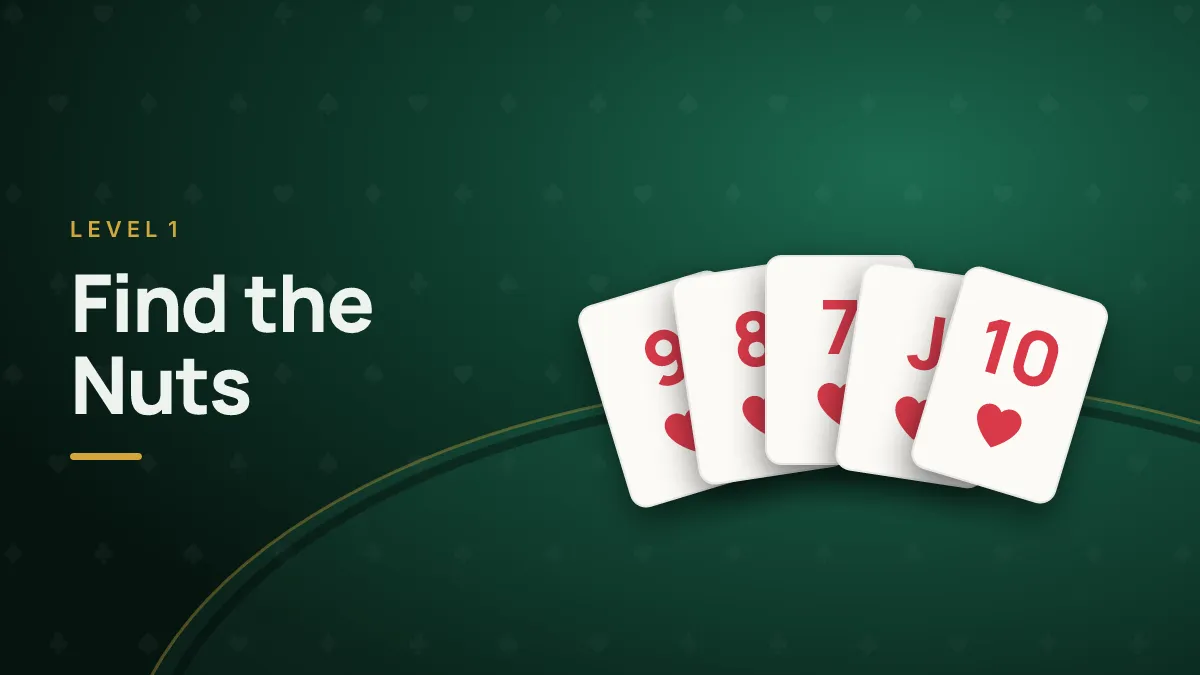
A four-step method to find the best possible hand on any board: check for pairs, flushes and straights, then rank the hands that beat you. With practice boards.
The unwritten and written rules of poker behaviour: acting in turn, protecting your hand, slow-rolling, angle-shooting, chat, time banks and fair play online.
Cash games, multi-table tournaments, sit & gos, fast-fold and table sizes explained — how each format works, what the stakes mean and which one to start with.
A simple, proven plan for your first sessions: which hands to play, how to bet, the five biggest beginner leaks and a checklist to use before, during and after you play.
Which two-card hands are worth playing, which to fold, and why position changes everything. Includes range charts and the mistakes to avoid.
Why acting last is such a big advantage, the name of every seat at the table, and how to adjust your hand selection and betting to your position.
Learn to count outs, calculate pot odds and use the rule of 2 and 4 to decide in seconds whether a call is profitable. Worked examples included.
How much to raise before the flop online and live, why limping loses money, how to punish limpers with isolation raises and how to steal the blinds.
When someone raises before you: when to call, when to 3-bet for value or as a bluff, how big to make it, and how to respond when your own open gets 3-bet.
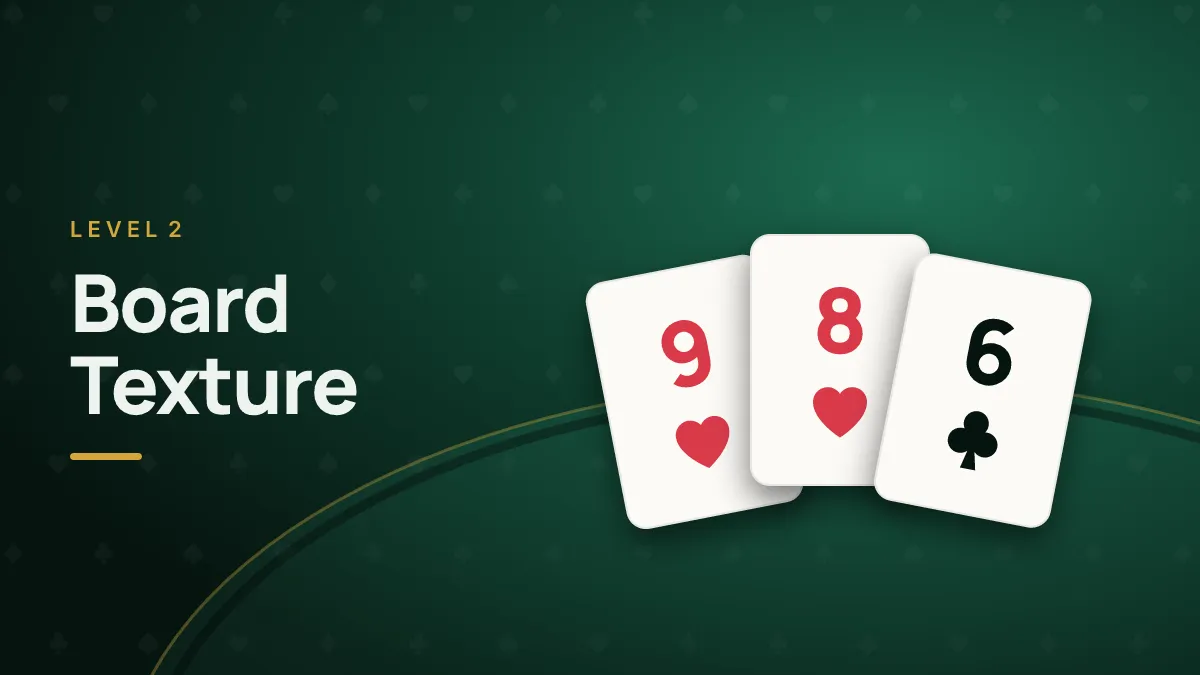
What makes a flop dry, wet, paired or monotone, which boards favour the preflop raiser or the caller, and how texture should change your betting.
Why betting and raising beats checking and calling: the two ways to win, how to calculate fold equity, and a worked semi-bluff example with real numbers.
What expected value (EV) is, how to calculate it for calls, bets and all-ins, why results and decisions are different things, and why money in the pot isn't yours.
Learn to put opponents on a range of hands instead of one guess: count combinations, remove cards you can see, narrow ranges street by street and make better calls.
When the continuation bet works, when to check instead, and how to choose a c-bet size from the board texture, your position and the number of opponents.
You called preflop and your opponent c-bets the flop. How to use price, board texture and position to decide when to fold, call or raise.
How to win the most with your good hands: the value-bet test, choosing sizes, thin value on the river, when not to slow-play and how to value bet different opponents.
How to bluff profitably: the break-even maths, why semi-bluffs beat pure bluffs, how to choose bluffing hands, the best spots to bluff and the opponents to avoid.
How to play hands that are good but not great: when to check, when to bet small, how to bluff-catch, and why turning medium hands into bluffs costs money.
When to keep betting on the turn and river: good and bad barrel cards, choosing your double and triple barrels, river value-to-bluff ratios and when to give up.
A full street-by-street review of ace-jack on the button against the big blind: c-bet sizing, a turn value bet and a tricky river decision.
How big your poker bankroll should be for cash games, tournaments and sit & gos, when to move up or down, and how to keep poker money separate from real life.
How your stack size in big blinds changes tournament strategy: deep, medium and short stacks, open-shoving, re-shoving, antes and when to move to push-fold.
What game theory optimal (GTO) poker really means: Nash equilibrium, balanced ranges, the indifference principle, minimum defence frequency and how solvers fit in.
How to choose a bet size with a reason: range and nut advantage, polarised and merged ranges, overbets, block bets and geometric sizing to get stacks in by the river.
What stack-to-pot ratio is, how to calculate it on the flop, and how SPR tells you which hands are strong enough to get all-in in single-raised, 3-bet and 4-bet pots.
3-bet pots are shallower and play faster. How ranges, SPR, c-bet sizes and commitment change after the flop — as the 3-bettor and as the caller.
How the cards in your hand change your opponent's range: counting blocked combos, choosing bluffs with blockers, value betting and preflop blockers.
How to defend the big blind profitably against steals, which flops to check-raise, how to build a check-raise range with value hands and draws, and how to size it.
Plan the whole hand before you bet the flop: sort your range into hand classes, pick barrel cards in advance, avoid capping your range and adjust on each street.
Why hands lose value multiway, how bluffs stop working, and simple rules for betting, sizing and pot control when three or more players see the flop.
A street-by-street review of ace-king in a 3-bet pot: why checking the flop was right, how to bet the turn and how thin to value bet the river.
Why tournament chips aren't worth their face value: how ICM turns stacks into prize equity, the bubble risk premium with worked numbers, and final-table strategy.
How to identify player types, read HUD stats like VPIP and PFR, exploit common low-stakes tendencies and adjust safely without being counter-exploited.
The types of tilt, the early warning signs, what to do in the moment and how to build habits that keep emotions from costing you money at the poker table.
How big poker's short-term swings really are, with worked numbers: standard deviation, why a winning player can lose for 10,000 hands, and how to handle a downswing.
How to record and read your poker results: what to track, win rate in bb/100 and bb per hour, tournament ROI, how big a sample you need and what rake does to results.
Build a weekly poker study routine that works: what to study, how to study actively, using tools and solvers sensibly, study groups and measuring your progress.
A step-by-step method for reviewing poker hands: which hands to pick, questions to ask on each street, avoiding results bias and turning reviews into rules.
Your win rate depends on who you play against. How to spot profitable tables, choose seats, pick formats, times and sites, and when to leave a game.
How live cash games differ from online poker: bigger sizes, straddles, limped pots, reading physical and timing tells — and hiding your own.
When you're ready to move up in stakes, how to take a planned shot with strict rules, what changes at higher stakes and why moving down is part of every winning career.
How to keep poker healthy and sustainable: time and money limits, the warning signs of problem gambling, poker as a hobby or a career, and where to get support.
Starting stacks, blind levels, antes, late registration, re-entries and payout structures — and how each one changes the way you should play a tournament.
How to play the first levels of a tournament: why deep stacks favour implied odds, which hands gain and lose value, and how to exploit loose early players.
Why antes make stealing so valuable in tournaments, how wide to open from late position, the right open sizes and how to handle stacks and players behind you.
Why the big blind ante makes defending so cheap in tournaments, which hands to call and 3-bet, how stack sizes change your defence and how to play after the flop.
How to play the middle of a tournament with 20–40bb: smaller opens, fewer speculative calls, 3-bet shoves, protecting your stack and building one before the bubble.
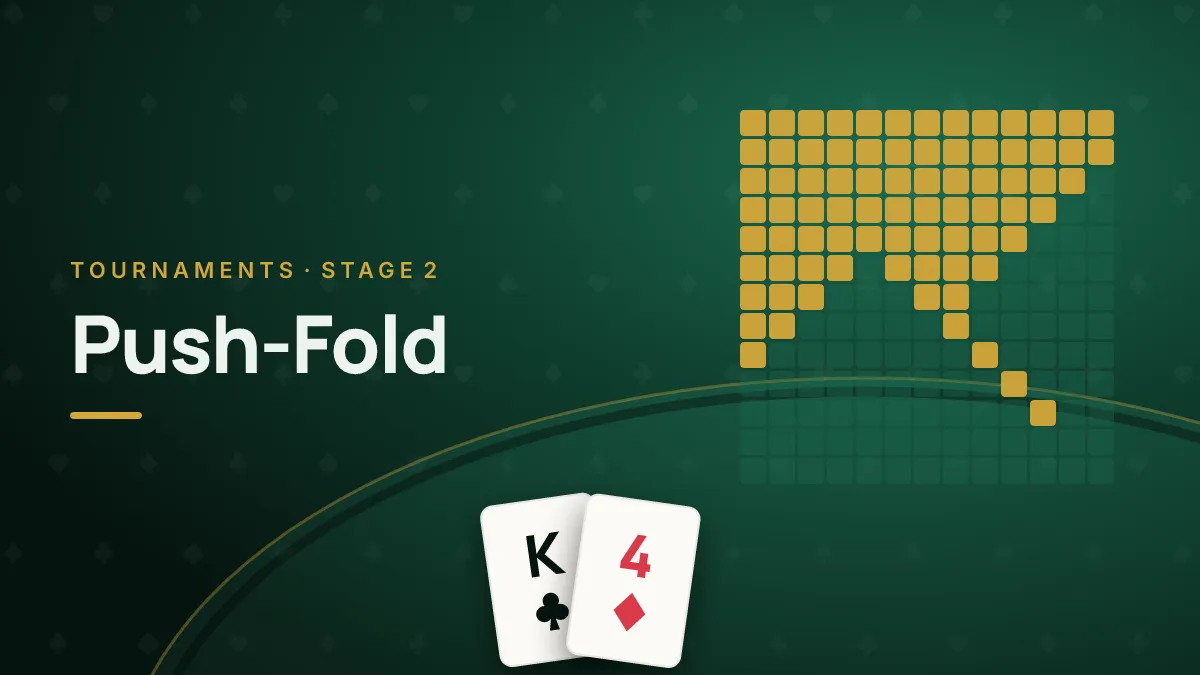
What push-fold charts are, how Nash equilibrium ranges are calculated, real small blind vs big blind shove and call ranges at 10 and 15bb, and when to deviate.
How to 3-bet shove over opens with 12–30bb: why reshoving works, a worked EV example, which hands to reshove, stack sizes that make it work and how to call reshoves.
How the money bubble changes tournament strategy: why medium stacks tighten up, how big stacks attack, how short stacks survive, and a worked ICM example.
A sit & go bubble hand reviewed with real ICM numbers: why a medium stack should fold ace-king to the chip leader's shove, and which hands can call.
How to play a tournament final table: pay jumps, ICM with a six-handed worked example, strategy for big, medium and short stacks, and how to think about deals.
How bounty and progressive knockout (PKO) tournaments work, how to include a bounty in your pot odds, why covering stacks matters and how ranges widen as bounties grow.
How satellite tournaments work, why every seat is worth the same, the extreme ICM near the bubble with a worked example, and when folding aces can be correct.
How to play heads-up for a tournament win: why ranges become so wide, button and big blind strategy, push-fold heads-up, and adjusting to your last opponent.
How to play Pot-Limit Omaha: dealing, betting rounds, the must-use-exactly-two rule, and the hand-reading traps that catch every Hold'em player moving to PLO.
How pot-limit betting works: the maximum bet and raise, the quick 3× formula for a pot-sized raise, and worked preflop and post-flop examples.
Why Omaha equities are so close: calculated match-ups for aces, rundowns and double-suited hands, why one pair rarely wins and why drawing to the nuts matters.
What makes a strong PLO starting hand: nut potential, suits, connectedness and pairs. The best hand types, the ones to avoid, and equity numbers for each.
How to play PLO before the flop: why position matters even more than in Hold'em, opening ranges by seat, raise sizes, when to 3-bet, and how to defend the blinds.
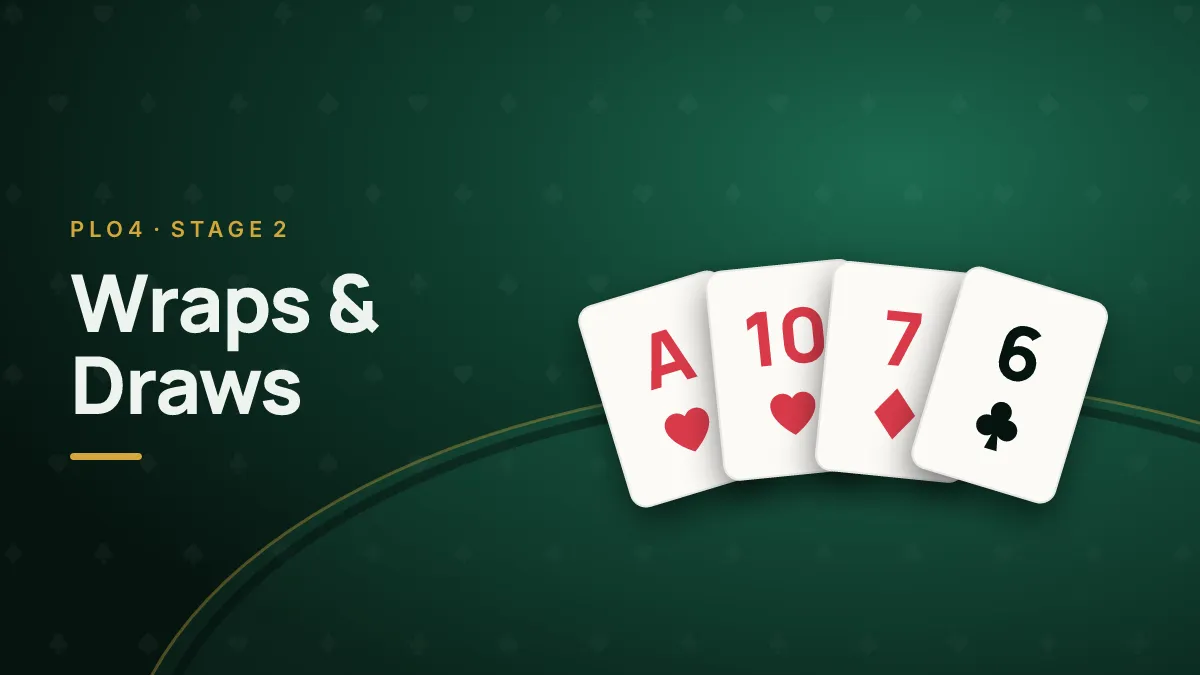
How to count and value draws in Pot-Limit Omaha: wraps with up to 20 outs, nut and non-nut flush draws, combo draws, redraws and freerolls — with calculated equities.
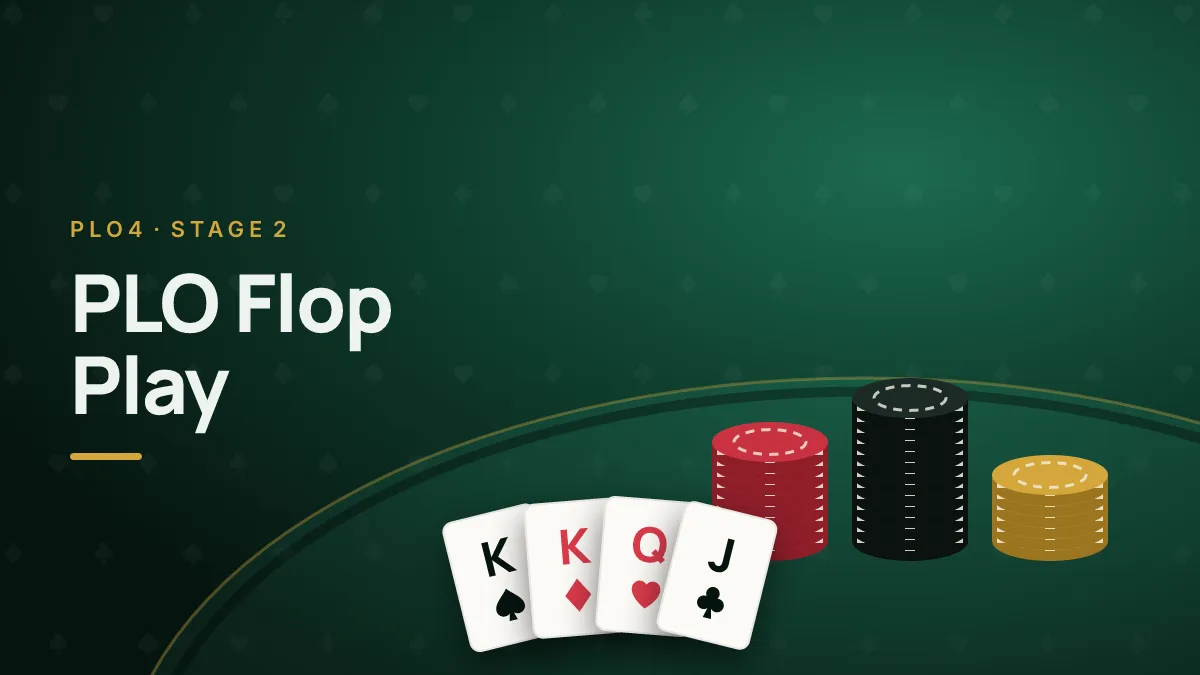
How to play the flop in Pot-Limit Omaha: which boards favour the preflop raiser, c-betting heads-up and multiway, bet sizes, and how to play made hands and draws.
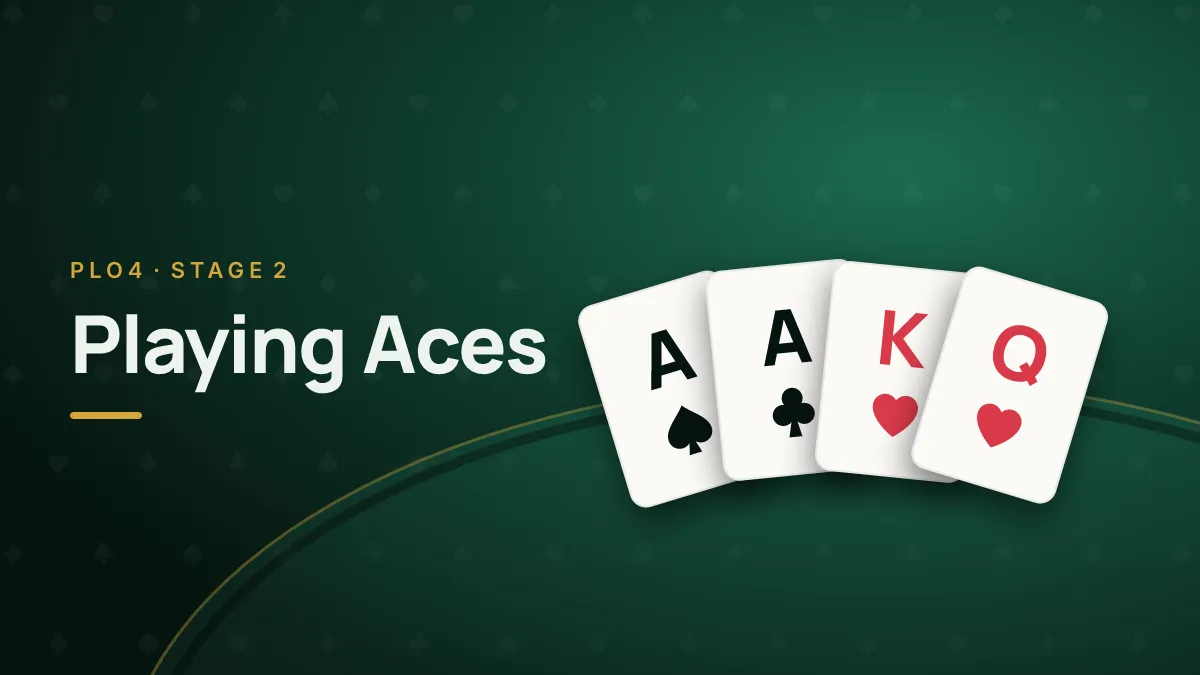
How to play pocket aces in Pot-Limit Omaha: good and bad aces, why 3-betting aces works, what happens multiway, and how to handle aces after the flop.
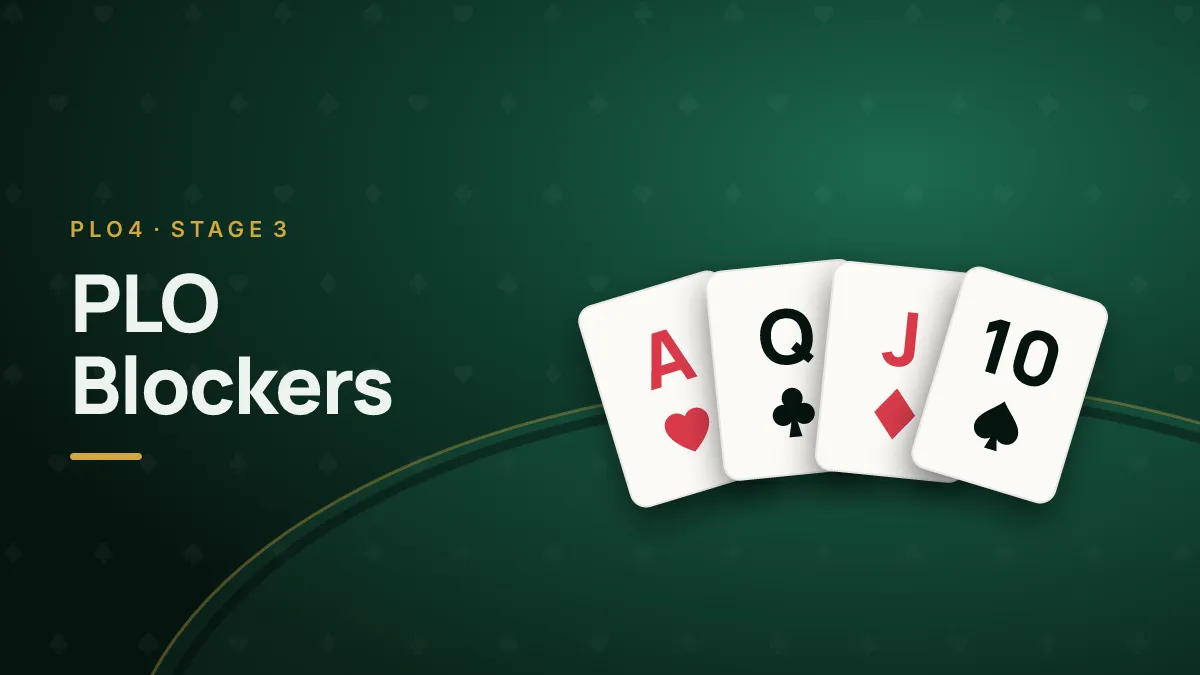
Why blockers matter even more in Omaha: bluffing with the nut blocker, blocking straights and full houses, choosing bluff-catchers, and when blockers aren't enough.
Stack-to-pot ratio in Pot-Limit Omaha: SPR in single-raised, 3-bet and 4-bet pots, the 1-3-9 rule for pot-sized bets, and which hands are strong enough to commit.
How to play the turn and river in Pot-Limit Omaha: how the nuts change, when to keep betting, river value bets, bluff-catching and folding second-best.
Why Pot-Limit Omaha swings more than Hold'em, worked variance numbers, how many buy-ins a PLO bankroll needs, and how to handle the downswings that come with the game.
How Five-Card Omaha works, what's the same as PLO4, and what changes: ten two-card combinations, stronger showdown hands and a bigger premium on the nuts.
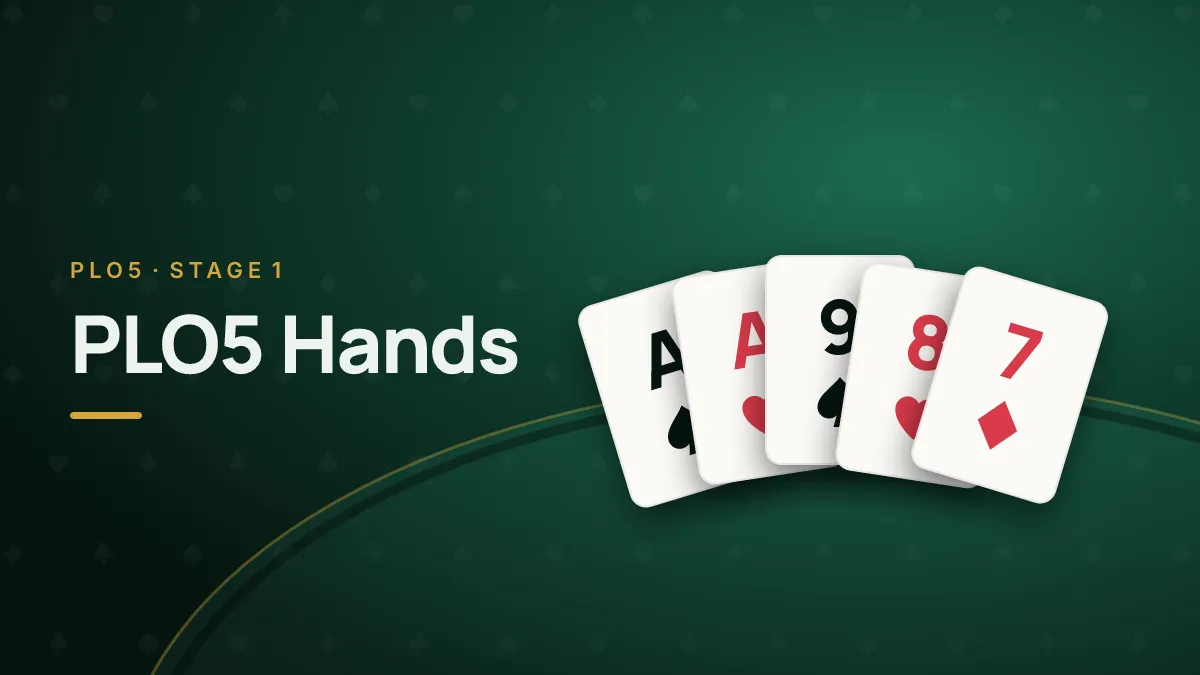
How to judge Five-Card Omaha starting hands: nut potential, suits, connectedness and the fifth card — with equity numbers for the best and worst hand types.
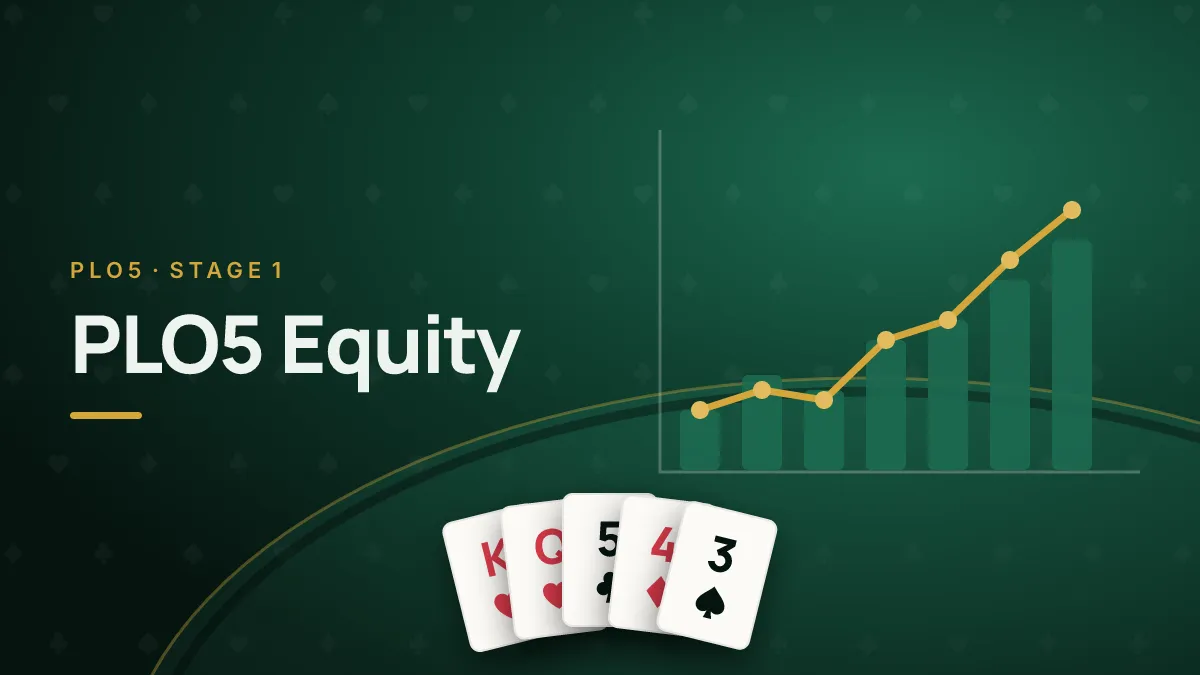
How equity behaves in Five-Card Omaha: closer preflop races, sets vs draws after the flop, the cost of non-nut draws and why second-best hands lose the biggest pots.
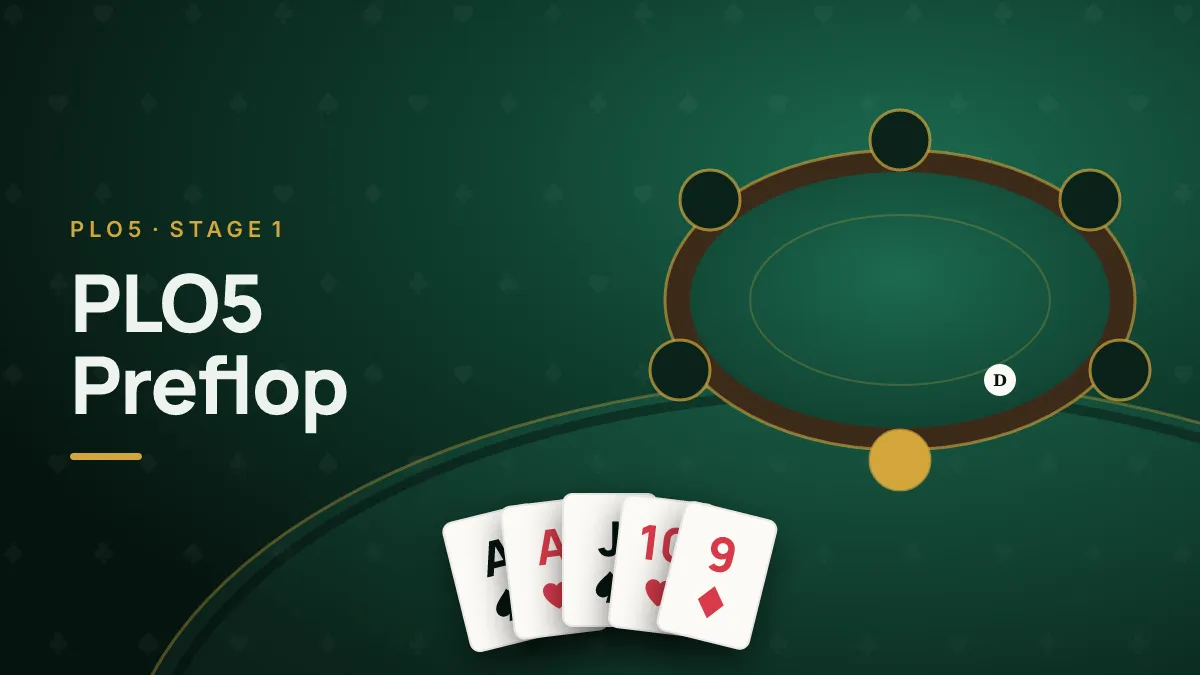
A practical preflop plan for Five-Card Omaha: opening by position, raise sizes, which hands to 3-bet, playing the blinds and adjusting for multiway pots.
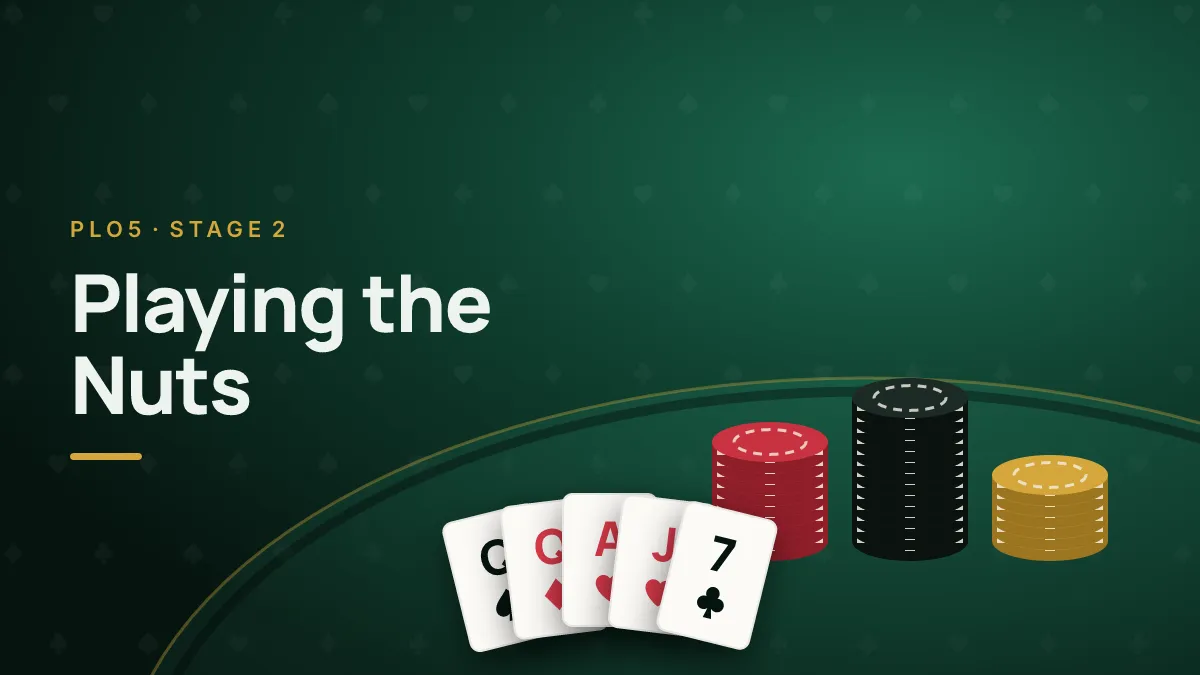
How to play the flop in Five-Card Omaha: naming the nuts, betting nut hands with redraws, handling sets and two pair, c-betting less, and folding second-best.
Drawing in Five-Card Omaha: 20-out wraps, nut vs non-nut draws, discounting outs when opponents hold more cards, and how redraws and freerolls win the biggest pots.
When bluffing works in Five-Card Omaha: why pure bluffs succeed less often, how five-card blockers help, the best bluffing spots, and what river raises usually mean.
Why Five-Card Omaha is the swingiest common poker game, how big a PLO5 bankroll should be, how to choose games and how to keep your head through the downswings.