

Level 3Tournaments
Tournament Strategy: Stack Sizes and Push-Fold Play
How your stack size in big blinds changes tournament strategy: deep, medium and short stacks, open-shoving, re-shoving, antes and when to move to push-fold.
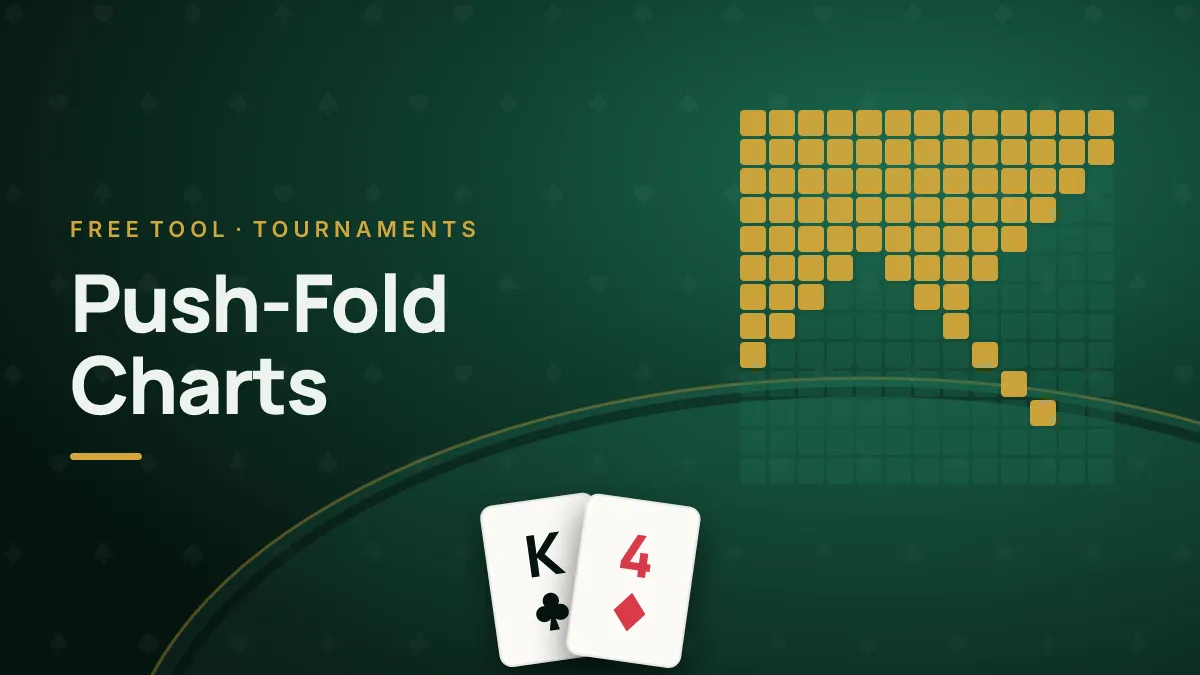
Nash shoving and calling ranges for tournaments from 3 to 20 big blinds, with or without a big blind ante.
Type a hand or tap any cell on the chart.
Small blind shoves
58.1%
of all starting hands
How to read it
Folded to you in the small blind with this stack? Shove the highlighted hands and fold the rest. In the big blind facing a shove? Call with the highlighted hands on the BB call tab.
Practise in the trainerThe charts are for small blind vs big blind — the widest spot. From earlier seats, with more players left to act, shove tighter. Learn the theory in Push-Fold Charts Explained.
They show which hands to go all-in with (and which to call an all-in with) when stacks are short. Our charts are the Nash equilibrium for the small blind against the big blind: neither player can gain by changing their range.
With our own solver: equities for all 169 starting-hand types from simulated run-outs, then repeated best responses until the ranges settle. Results match widely published charts — for example, at 10bb with no ante the small blind shoves about 58% of hands and the big blind calls about 38%.
With a big blind ante, there is 1bb more dead money in the pot, so shoving wins more when the big blind folds and the big blind is getting a better price to call. Both ranges get much wider.
Use it as your baseline. Shove wider against players who call too tightly, tighter against players who call too much, and adjust for ICM near the money and at final tables.
How your stack size in big blinds changes tournament strategy: deep, medium and short stacks, open-shoving, re-shoving, antes and when to move to push-fold.
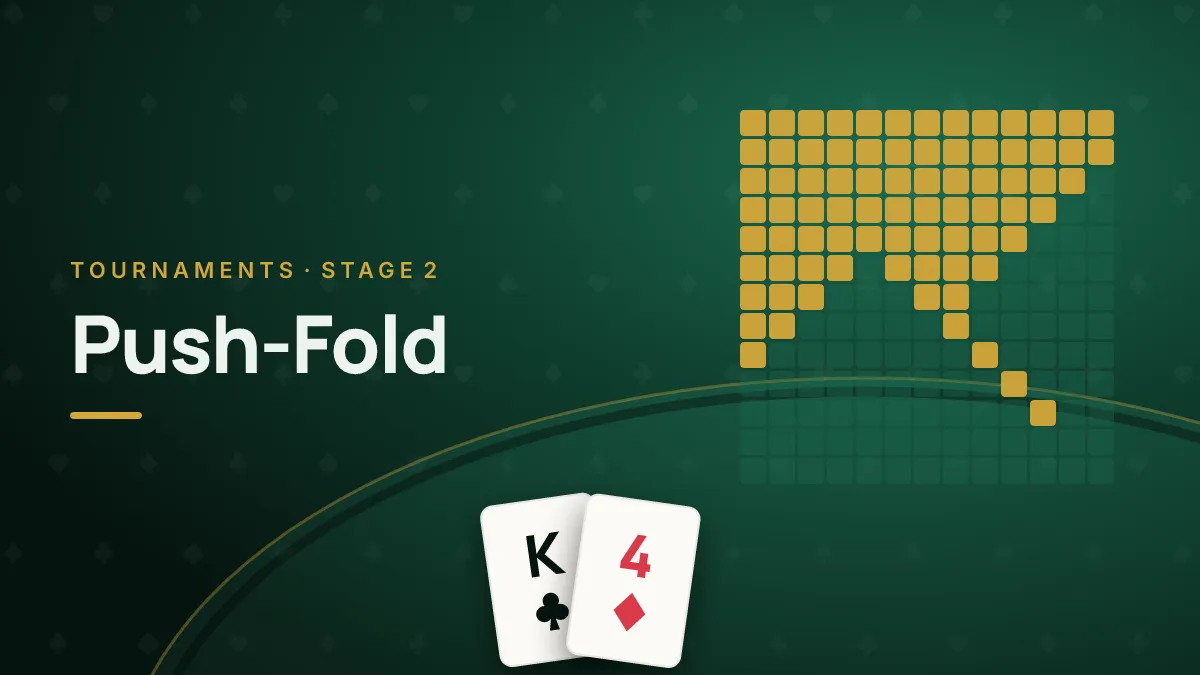
What push-fold charts are, how Nash equilibrium ranges are calculated, real small blind vs big blind shove and call ranges at 10 and 15bb, and when to deviate.
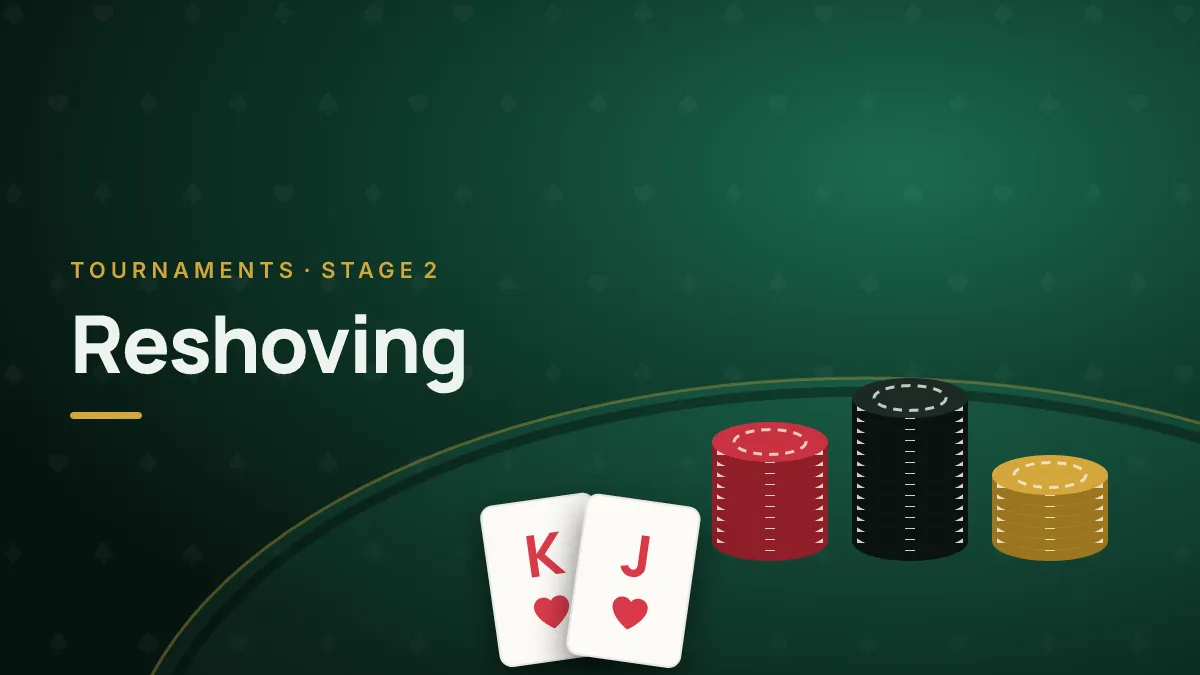
How to 3-bet shove over opens with 12–30bb: why reshoving works, a worked EV example, which hands to reshove, stack sizes that make it work and how to call reshoves.