
PLO4 · Stage 1PLO
Pot-Limit Omaha Rules: Four Cards, Use Exactly Two
How to play Pot-Limit Omaha: dealing, betting rounds, the must-use-exactly-two rule, and the hand-reading traps that catch every Hold'em player moving to PLO.
Equity for Pot-Limit Omaha — four-card and five-card. Enter up to six hands and any board, scored with the exactly-two rule.
Exactly two hole cards + three board cards.
Player 1
Empty = random hand
Player 2
Empty = random hand
Player 3
Empty = random hand
Player 4
Empty = random hand
Player 5
Empty = random hand
Player 6
Empty = random hand
Board (optional)
Pick a card for the highlighted slot:
Results
Choose at least one hand, then press calculate.
A♠A♥K♠K♥ against J♦T♦9♣8♣ is only about 61% to 39% before the flop. On a 9♥ 8♣ 2♦ flop, J-T-7-6 with a 20-out wrap is a slight favourite over top set. Try these yourself, then read PLO Hand Values to see why Omaha equities run so close.
Every hand is scored the Omaha way: exactly two hole cards plus exactly three board cards. When all hands and the flop are known, it checks every possible turn and river exactly. Before the flop, or with random hands, it simulates tens of thousands of deals.
Yes. Switch to PLO5 and each player gets five card slots. The exactly-two rule still applies.
Each four-card hand contains six two-card combinations (ten in PLO5), so every hand has many ways to improve. Even A♠A♥K♠K♥ is only about a 71% favourite against a random hand.
How to play Pot-Limit Omaha: dealing, betting rounds, the must-use-exactly-two rule, and the hand-reading traps that catch every Hold'em player moving to PLO.
Why Omaha equities are so close: calculated match-ups for aces, rundowns and double-suited hands, why one pair rarely wins and why drawing to the nuts matters.
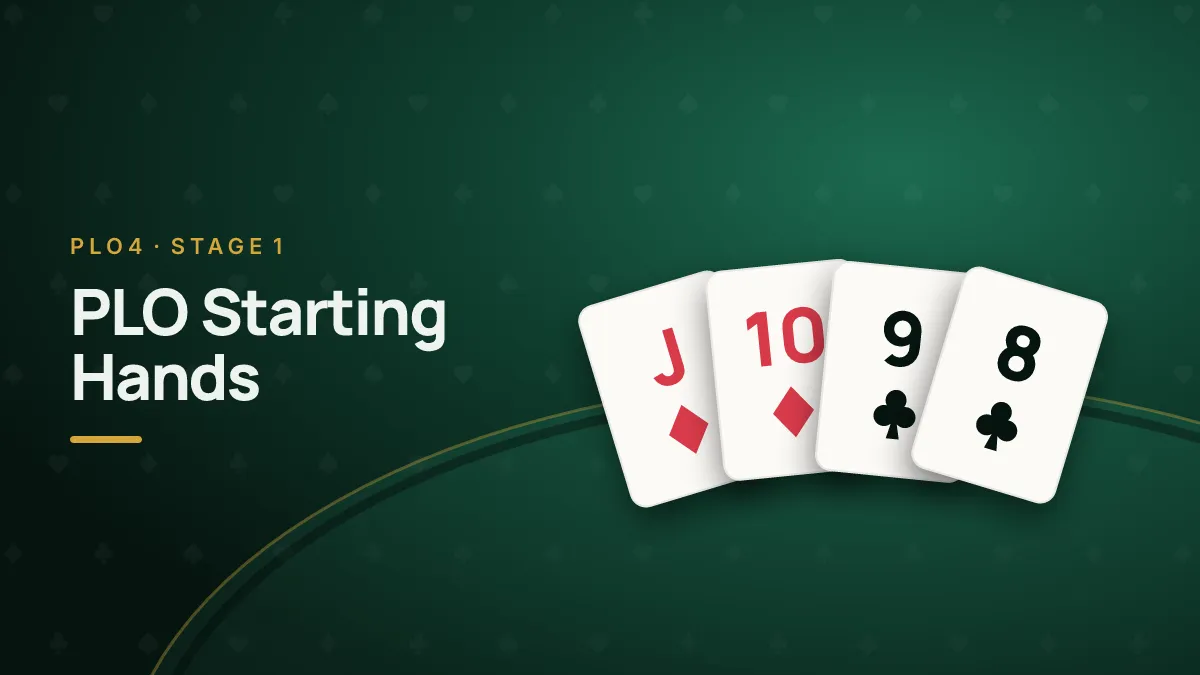
What makes a strong PLO starting hand: nut potential, suits, connectedness and pairs. The best hand types, the ones to avoid, and equity numbers for each.