
Level 1Strategy
Your First Sessions: A Simple Beginner Game Plan
A simple, proven plan for your first sessions: which hands to play, how to bet, the five biggest beginner leaks and a checklist to use before, during and after you play.
Topic
Decision-making fundamentals that apply to every game and format.
A simple, proven plan for your first sessions: which hands to play, how to bet, the five biggest beginner leaks and a checklist to use before, during and after you play.
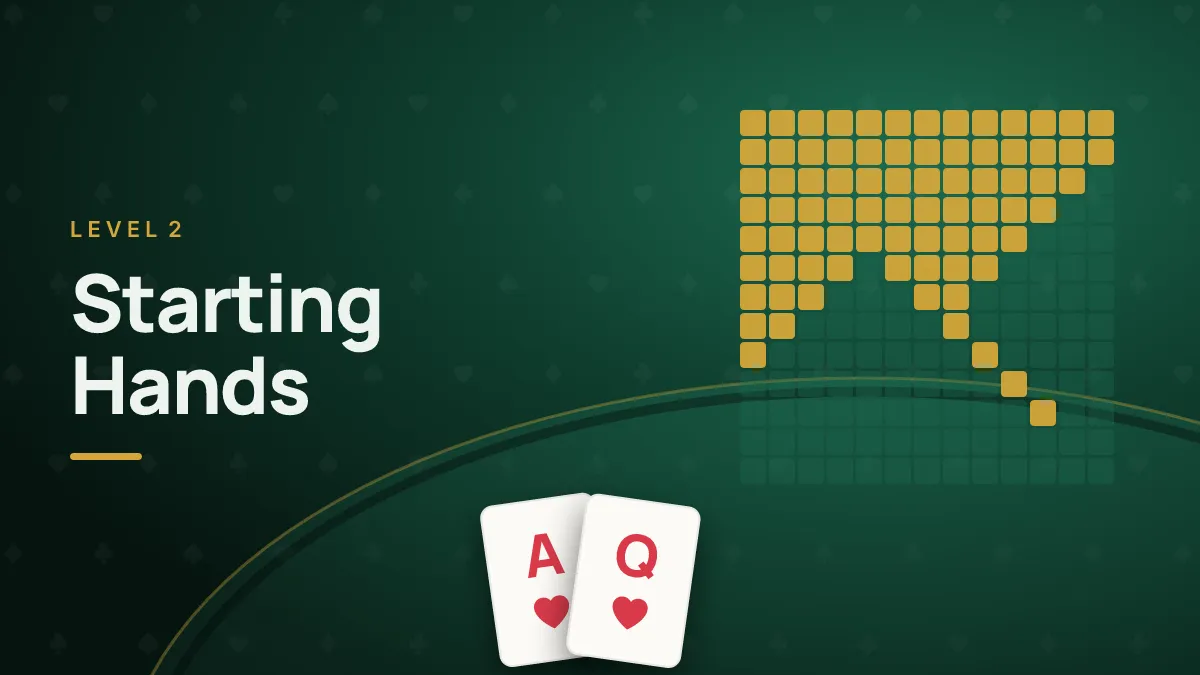
Which two-card hands are worth playing, which to fold, and why position changes everything. Includes range charts and the mistakes to avoid.
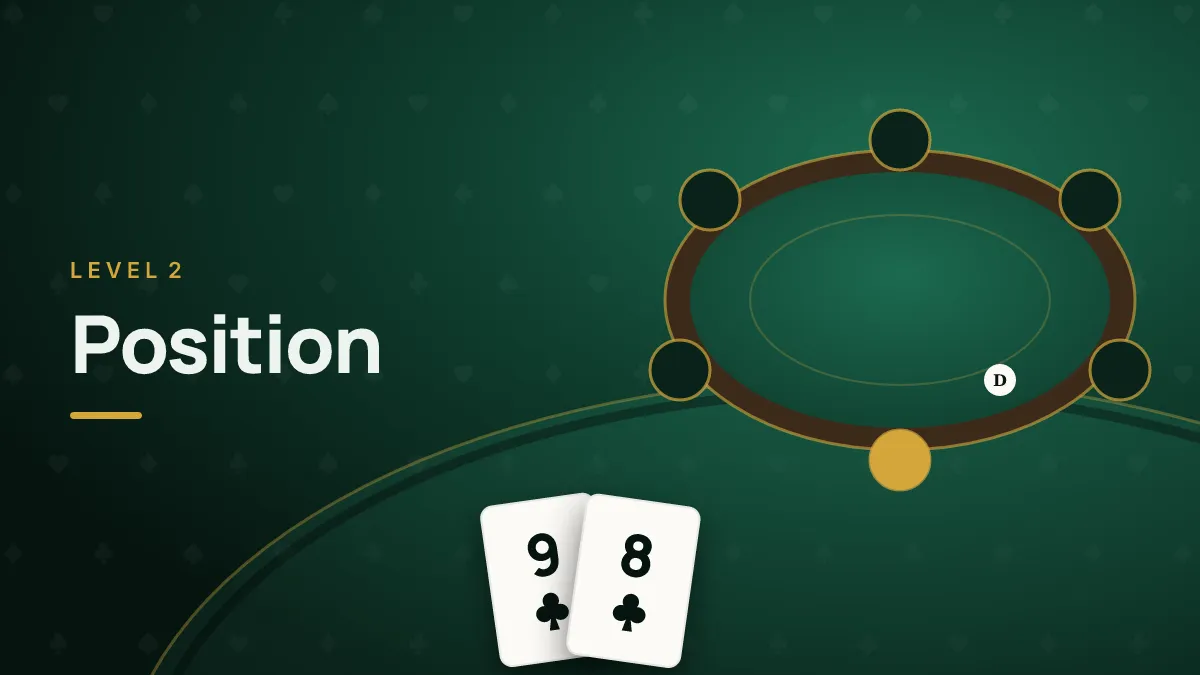
Why acting last is such a big advantage, the name of every seat at the table, and how to adjust your hand selection and betting to your position.
Learn to count outs, calculate pot odds and use the rule of 2 and 4 to decide in seconds whether a call is profitable. Worked examples included.
How much to raise before the flop online and live, why limping loses money, how to punish limpers with isolation raises and how to steal the blinds.
When someone raises before you: when to call, when to 3-bet for value or as a bluff, how big to make it, and how to respond when your own open gets 3-bet.
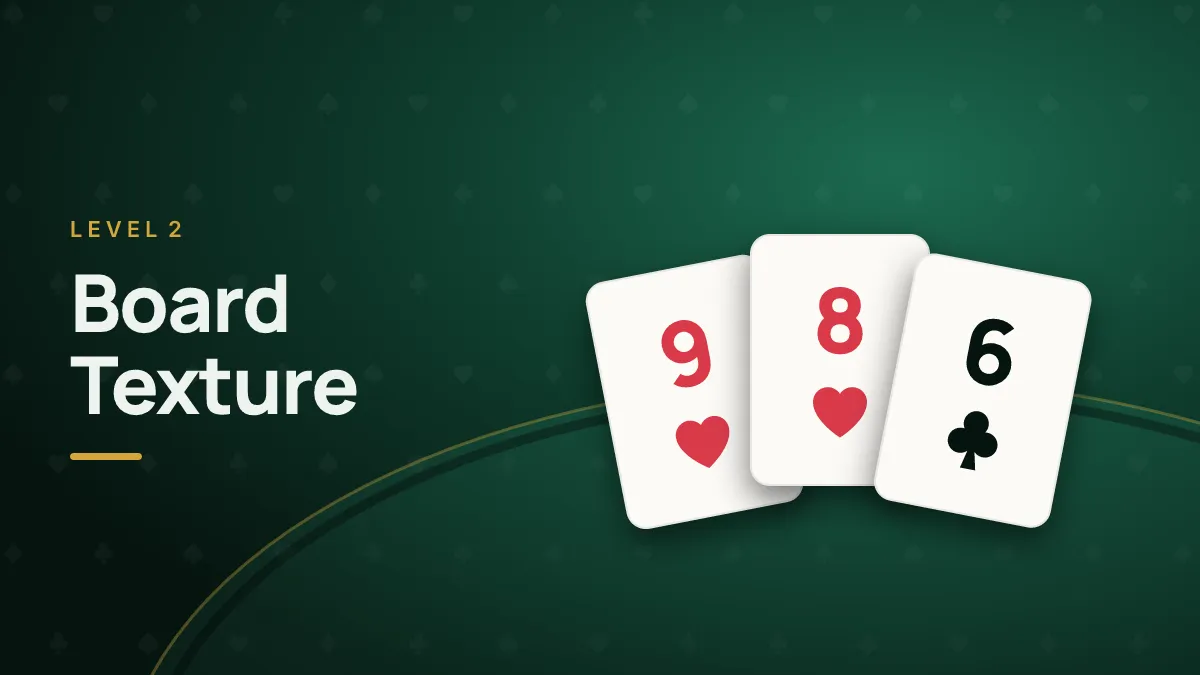
What makes a flop dry, wet, paired or monotone, which boards favour the preflop raiser or the caller, and how texture should change your betting.
Why betting and raising beats checking and calling: the two ways to win, how to calculate fold equity, and a worked semi-bluff example with real numbers.
What expected value (EV) is, how to calculate it for calls, bets and all-ins, why results and decisions are different things, and why money in the pot isn't yours.
Learn to put opponents on a range of hands instead of one guess: count combinations, remove cards you can see, narrow ranges street by street and make better calls.
When the continuation bet works, when to check instead, and how to choose a c-bet size from the board texture, your position and the number of opponents.
You called preflop and your opponent c-bets the flop. How to use price, board texture and position to decide when to fold, call or raise.
How to win the most with your good hands: the value-bet test, choosing sizes, thin value on the river, when not to slow-play and how to value bet different opponents.
How to bluff profitably: the break-even maths, why semi-bluffs beat pure bluffs, how to choose bluffing hands, the best spots to bluff and the opponents to avoid.
How to play hands that are good but not great: when to check, when to bet small, how to bluff-catch, and why turning medium hands into bluffs costs money.
When to keep betting on the turn and river: good and bad barrel cards, choosing your double and triple barrels, river value-to-bluff ratios and when to give up.
What game theory optimal (GTO) poker really means: Nash equilibrium, balanced ranges, the indifference principle, minimum defence frequency and how solvers fit in.
How to choose a bet size with a reason: range and nut advantage, polarised and merged ranges, overbets, block bets and geometric sizing to get stacks in by the river.
What stack-to-pot ratio is, how to calculate it on the flop, and how SPR tells you which hands are strong enough to get all-in in single-raised, 3-bet and 4-bet pots.
3-bet pots are shallower and play faster. How ranges, SPR, c-bet sizes and commitment change after the flop — as the 3-bettor and as the caller.
How the cards in your hand change your opponent's range: counting blocked combos, choosing bluffs with blockers, value betting and preflop blockers.
How to defend the big blind profitably against steals, which flops to check-raise, how to build a check-raise range with value hands and draws, and how to size it.
Plan the whole hand before you bet the flop: sort your range into hand classes, pick barrel cards in advance, avoid capping your range and adjust on each street.
How to identify player types, read HUD stats like VPIP and PFR, exploit common low-stakes tendencies and adjust safely without being counter-exploited.
Other topics: Rules · Tournaments · Cash Games · PLO · Hand Reviews · Bankroll · Mindset