
Blog
String Bet Rule in Poker: What It Is and How to Avoid It
A string bet is putting chips in with more than one forward motion without announcing a raise. Here's the rule, the oversized-chip rule and how to bet cleanly.
By PokerLevelUp Team · · 1 min read
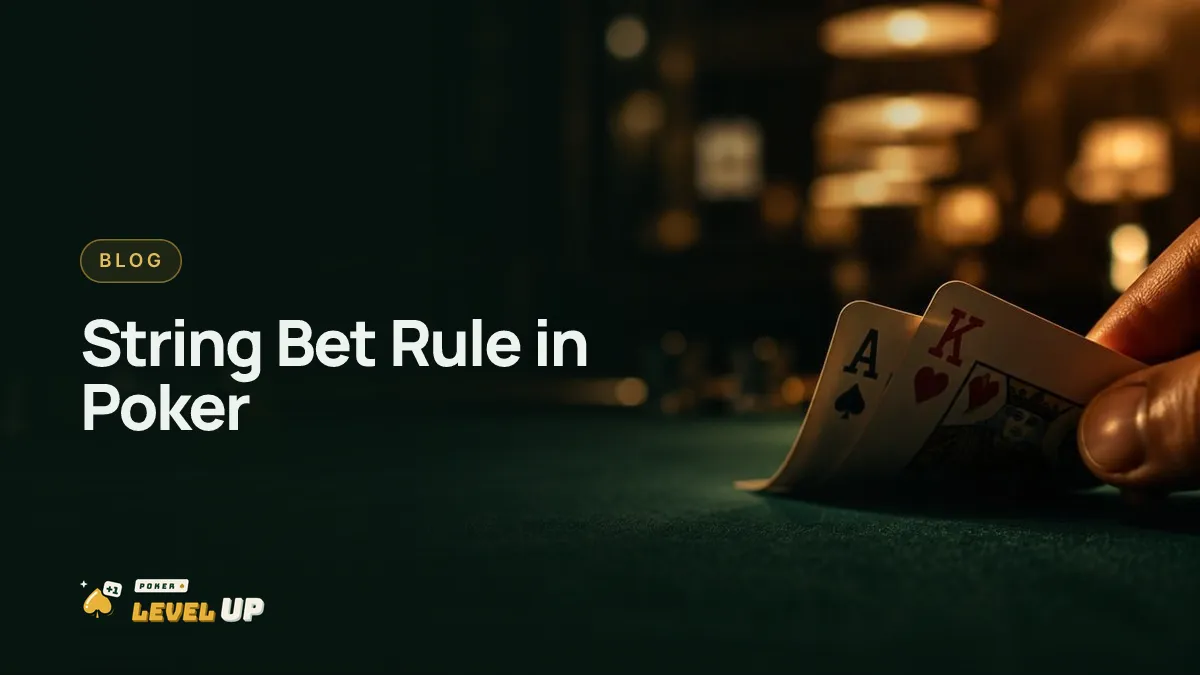
A string bet (or string raise) is when a player puts chips into the pot in more than one forward motion without first announcing how much they’re betting. It isn’t allowed in live poker. If the dealer rules a string bet, only your first motion counts — usually meaning you’ve just called.
Why it’s banned
Without the rule, a player could push in enough to call, watch an opponent’s reaction, and then go back to their stack for more. That’s an angle shoot: getting information before committing to a raise. The string bet rule stops it by making your action fixed from the first motion.
What counts as a string bet
- Putting in a call, then reaching back to your stack for more chips.
- Saying “I call… and raise” — “call” is binding the moment you say it.
- Pushing chips forward in two or three separate trips without saying a number.
What doesn’t
- Announcing first. Say “raise to 60” or “raise”, and then you can put the chips in as slowly as you like. Verbal declarations are binding and override the motion.
- One motion with a handful of chips, even if they spill forward.
- Online poker. The software takes your full bet in one click; string bets don’t exist online.
The oversized-chip rule
A related rule: if you put in a single chip bigger than the bet you face without saying anything, it’s a call, not a raise. Facing a 25 bet, tossing in one 100 chip is a call. If you want to raise, say “raise” before the chip hits the felt.
If there is no bet yet, a single oversized chip is a bet of that chip’s full value.
How to never get caught
- Say the number. “Raise to 75.” Then move the chips.
- If you don’t want to talk, count your chips first and push them forward in one motion.
- Don’t say “call” unless you mean only to call.
Related rules
#rules#betting#etiquette#live
Practise what you just read
Get the weekly level-up
One short email a week: a new lesson, a hand to think about and a tool tip. No spam, unsubscribe any time.
By subscribing you agree to our privacy policy.